Pay in installments of $5.01 with
 ,
,
 and
and

Shipping Estimate
USA
- USA
- CAN
- USA
- CAN
Ships within 48 hours · Estimated delivery Jun 28 - Jul 3
 Promo Codes Available:
For Your Every Summer RSVP, with Code: SUMMER15
Description
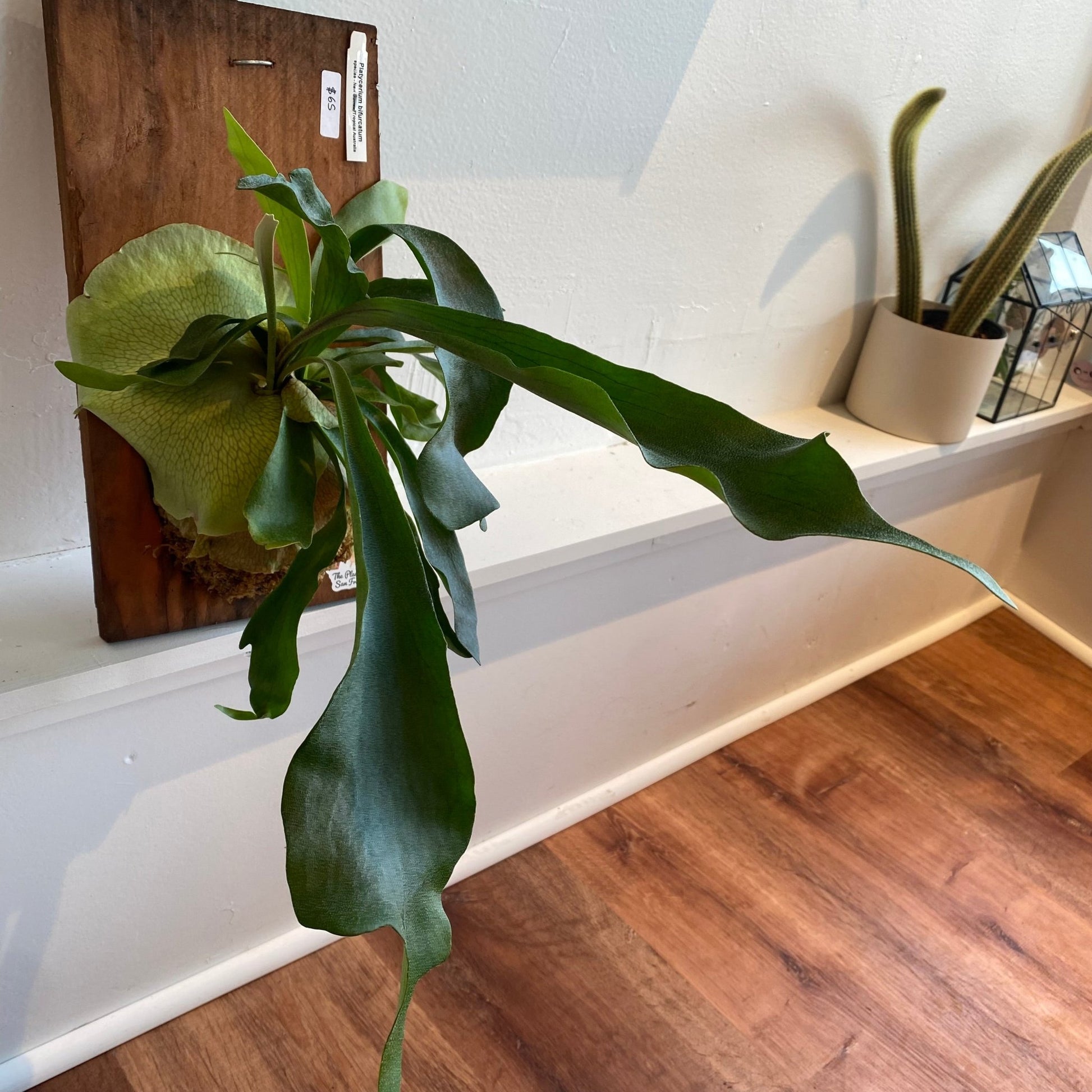
is a staghorn fern an air plant Platycerium bifurcatum ("Common" Staghorn Fern) – The Plant Lady SFStaghorn ferns are a group of about 18 species of epiphytic ferns in the genus Platycerium of the polypod family (Polypodiaceae) native primarily to Africa, Australia and Southeast Asia, whose fronds supposedly resemble the forked antlers of male deer or elk. The names staghorn fern and elkhorn fern are often used interchangeably, although those with thinner fronds are often called elkhorn ferns. P. bifurcatum is the species most commonly cultivated
Staghorn ferns are a group of about 18 species of epiphytic ferns in the genus Platycerium of the polypod family (Polypodiaceae) native primarily to Africa, Australia and Southeast Asia, whose fronds supposedly resemble the forked antlers of male deer or elk.
The names “staghorn fern” and “elkhorn fern” are often used interchangeably, although those with thinner fronds are often called elkhorn ferns.
P. bifurcatum is the species most commonly cultivated as an ornamental plant, since it is probably the easiest to grow. Native to rainforests of Java, New Guinea and southeastern Australia, it does best with year-round temperatures above 40°F, so it can only be grown in gardens with a very mild climate (zones 9 and above) or as a house plant that can bemoved outdoors during the summer. It has naturalized in Florida and Hawaii, where it is considered an invasive species on the islands. Staghorn fern makes a great ornamental adornment for a wall indoors or seasonally outdoors in the Midwest. This species was given the Royal Horticulture Society’s Award of Garden Merit in 1993.
As epiphytes, staghorn ferns do not grow in soil, but attach to trees when growing in nature. Small plants can be grown in containers with a rich and very well-drained medium. In indoor cultivation, staghorn ferns are typically grown mounted on wooden boards or bark slabs, in wire baskets, or on other supports that provide the essential perfect drainage and are more convenient for plant management than a living tree (as well as better showing off their distinctive looks and beauty than in a container). Some sort of growing medium – often sphagnum or peat moss – is provided for the roots coming from the basal fronds to grow into. The fern is secured to the support by monofilament fishing line, wire, plastic mesh or other materials wrapped over/through the dead, brown shield-shaped basal fronds ((not over the soft, green fronds or they will be badly damaged or killed) to hold it in place until well established. As new basal fronds are produced, they will hide the fastening material as they grow over the old fronds).
These tropical plants need good air circulation, bright indirect light, warm temperatures, moderate humidity and consistent moisture. Staghorn ferns absorb water through their fronds as well as the roots so be sure to soak the basal fronds and the medium. Allow some drying of the growing medium in between waterings; staghorn ferns rot easily if overwatered. Rainwater is best if it is available. Established plants are fairly drought tolerant so can withstand fairly long periods without water. More moisture is needed when growing in summer and less in cold weather. They can tolerate more direct sunlight when humidity and temperatures are high but also require more water when in direct light.
These plants do best with normal household temperatures above 55ºF. Staghorn ferns grown as house plants can be moved outside for the growing season once nighttime temperatures are consistently in the 40ºFs, acclimating them gradually to the higher light levels outside. Although staghorn fern can survive briefly freezing temperatures down to the mid-20ºFs, it is best to move plants indoors before nighttime temperatures drop into the 40ºFs in the fall. In mild temperatures like Northern California, these plants can be grown outside year round.
Plants can be fertilized monthly during the warmer months with balanced, diluted liquid fertilizer or slow-release fertilizer pellets placed in the growing medium. Providing sufficient humidity can be a challenge indoors and may require frequent misting when ambient humidity is low. If the light and air circulation is appropriate, a bathroom is an ideal place with its periodic humidity from the shower. Staghorn fern has few pests but may become infested with scale insects or mealybugs. The tan or brown, shield-like basal fronds shouldn’t be removed even if they look dead until they fall off naturally, as they help anchor and protect the plant. Don’t try to wipe off the tiny whitish-grey, furry scales on the fertile fronds that makes them dusty-looking as that covering helps slow transpiration. Withered fertile fronds can be pruned off.
Shipping Notes
- Free Standard Shipping on $100+ Orders to the USA.
- Except Preorder products are shipped in 48 hours.
- Delivery to the USA:
- Standard Shipping : 3-10 business days
- If time is of the essence, please consider selecting expedited delivery for faster service.
Exchange/Return Notes
- We offer a 30-day return/exchange service after receiving.
- Final sale items are not eligible for returns or exchanges.
- To process your return/exchange, please contact us at [email protected]
- Please click here for more details>>> Return & Exchange Policy